
Overview
A Joyful First Step into Mathematics
Our goal is simple: we want children to enjoy the class so much that they don’t want it to end.
For our youngest students, mathematics begins with curiosity, play, and discovery. Children explore numbers, patterns, shapes, logic, and spatial relationships through games, hands-on activities, construction sets, mosaics, and other materials designed for young learners.
At this age, children learn by doing. They build, sort, compare, experiment, look for patterns, and figure things out for themselves. Along the way, they discover that mathematics is much more than counting—it is a way to understand and explore the world around them.
Most importantly, we want their first experience with math to be filled with curiosity, confidence, and the excitement of discovering something new.
About this course

Numbers & Number Sense
How Many Do You See?
Children explore numbers by counting, comparing quantities, and recognizing how many objects they see without always counting one by one. They begin to understand how numbers relate to one another and discover different ways to make the same number. These early experiences build the number sense that will support everything they learn in math later on.

Patterns
What Comes Next?
Young children are natural pattern finders. Students learn to recognize, continue, and create patterns using colors, shapes, objects, movements, and numbers. Discovering patterns helps children learn to make predictions and recognize relationships—important skills for future mathematical thinking.

Logic & Problem Solving
Can You Figure It Out?
What belongs here? What is missing? Which one doesn’t fit? Through playful logic games, riddles, and challenges, children search for clues, test ideas, and discover solutions. They learn that thinking hard can be fun—and that some of the best moments in math begin with “Hmm… let me try!”

Shapes & Geometry
What Can You Make with Shapes?
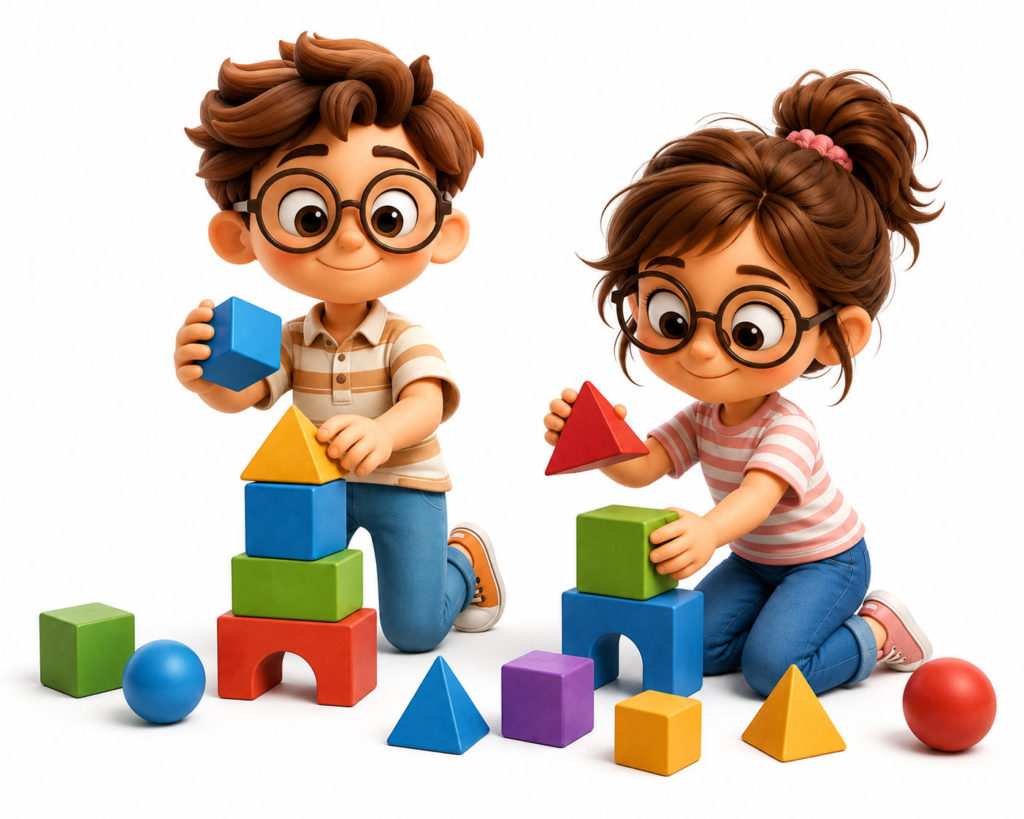
Can two triangles make a square? How many different shapes can you build from the same pieces? Children explore geometry by drawing, building, combining, and taking shapes apart. As they experiment, they begin to notice sides, corners, symmetry, and other properties of shapes—all while discovering that geometry can be surprisingly fun.

Spatial Reasoning
Can You Picture It?
What would this building look like from the other side? Which piece will fit into the empty space? Through hands-on games and challenges, children learn to rotate objects, match different views, follow simple maps, and imagine how things fit together. These activities strengthen their ability to think visually—a skill that will become increasingly important in geometry, mathematics, and STEM.

Building & Creating
Can You Build It?
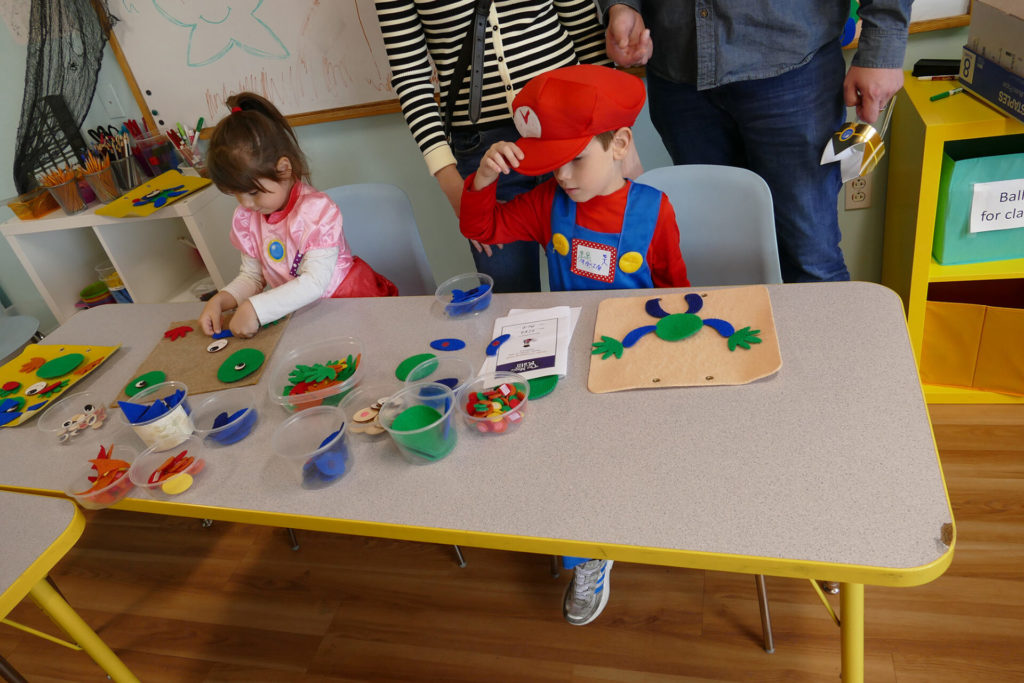
Using construction sets, blocks, mosaics, and other hands-on materials, children build, experiment, and improve their designs. Along the way, they explore balance, symmetry, size, and structure while discovering that sometimes the best way to learn is simply to build it and see what happens. They learn mathematics through their hands as well as their minds.
We Believe
What to Expect:
Our Pre-K program is offered in 8-week sessions, giving young children a chance to experience our approach to mathematics without a long-term commitment.
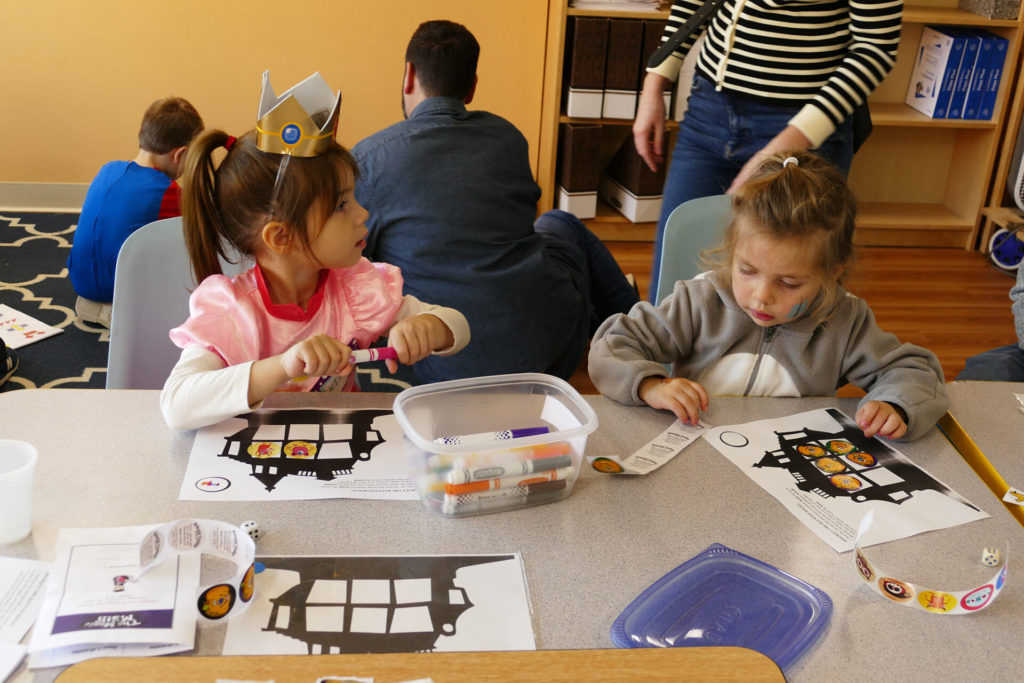
Groups of 4–6 students meet in person once a week for 45 minutes. Small groups allow every child to participate, interact with the teacher, and stay actively involved throughout the class.
Don’t expect a traditional math class! Children explore early arithmetic, patterns, logic, geometry, and spatial reasoning through games, riddles, hands-on challenges, and construction sets. Every activity is designed to combine learning with discovery and fun.
It’s not unusual for children to want to keep working when class is over. When possible, we give them a little extra time to finish the game, construction, or challenge they’re excited about.
What Your Child Will Gain

Children discover that math can be something they look forward to. They experience the excitement of figuring something out, building something that works, and finding an answer all by themselves.
It’s not unusual for children to want to keep working when class is over. When possible, we give them a little extra time to finish the game, construction, or challenge they’re excited about.
Through numbers, patterns, shapes, logic, and spatial challenges, children begin to recognize relationships and make connections. These early experiences create a strong foundation for the mathematics they will encounter in school.
Children enter Kindergarten more comfortable with numbers, problem solving, following directions, sharing ideas, and learning in a small group. Most importantly, they arrive ready to be curious, participate, and learn.