
Overview
Where Curiosity Becomes Confidence
The early elementary years are one of the most important stages in a child’s mathematical development. It’s during this time that children form not only their understanding of numbers and patterns, but also their confidence and attitude toward math. Our goal is to make those first experiences positive, engaging, and full of discovery.
We believe children learn best when mathematics is connected to the world around them. They explore real-life situations, discuss their ideas, build with hands-on materials, solve puzzles, and discover patterns before learning formal methods. Instead of simply memorizing procedures, students develop an understanding of why mathematics works.
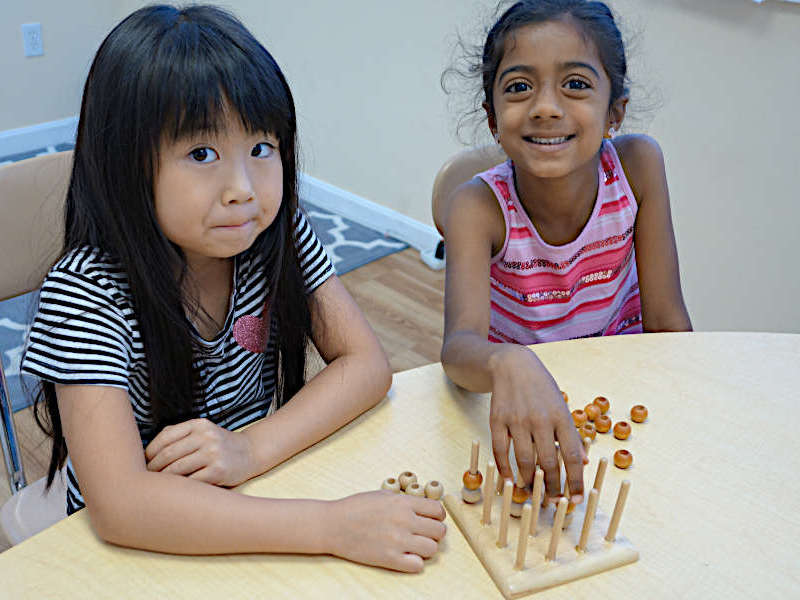
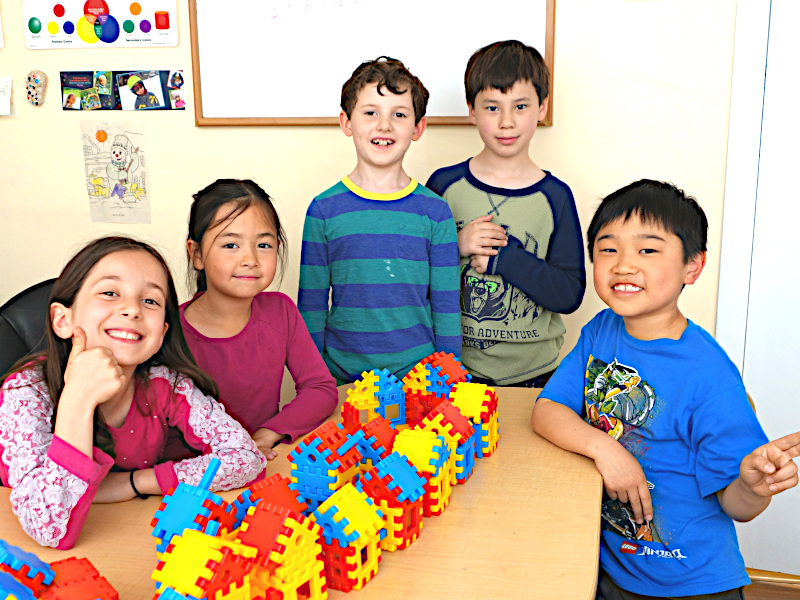
Hands-on exploration is an essential part of every lesson. Students spend time working with construction sets, geometric puzzles, manipulatives, and other interactive materials that help them visualize mathematical ideas. These experiences make abstract concepts tangible while developing the spatial reasoning and problem-solving skills that support future learning in mathematics and STEM.
Whether our students grow up to become scientists, engineers, artists, entrepreneurs, or pursue entirely different paths, they leave our program with something that benefits everyone: curiosity, confidence, logical thinking, and a strong mathematical foundation.
Curriculum Grade K
General development
- Counting skills
- Connect the dots in order up to 15
- Counting the number of objects
- Converting a number to a set and vice versa
- Count the hidden objects
- Fine motor skills
- Shading
- Tracing
- Follow the path
- Paper folding and origami
- Attention and Concentration
- Mazes
- Find the differences and mistakes in the pictures
- Find a hidden object, segments
- Make an identical picture
- Describe the features of an object (faces)
- Drawings of digits
- General knowledge
- General questions
- Math fairy tales
- Opposites
Arithmetic
- Ordinal numbers
- Compare the number of objects in two sets
- Addition and subtraction within 10
- Addition and subtraction within 100
Geometry
- Identifying basic features of 2D shapes
- Straight and curved
- Size
- Number of sides
- Identifying solids and their basic features
- flat versus 3D
- most common solids (sphere, cone, cylinder, cube, rectangular prism)
- Development of spatial and geometric thinking
- Find geometric shapes in the pictures
- Copy design on a grid
- Match by shape
- Complete the drawings of an object
Logic
- Logic grids problems
- Introduction to sets; intersection of sets
- Grouping and classification of objects
- Analogies and patterns
- Sequence of events and sequence of drawing
Word problems
- One-step word problems involving addition and subtraction of whole numbers
Algebraic thinking
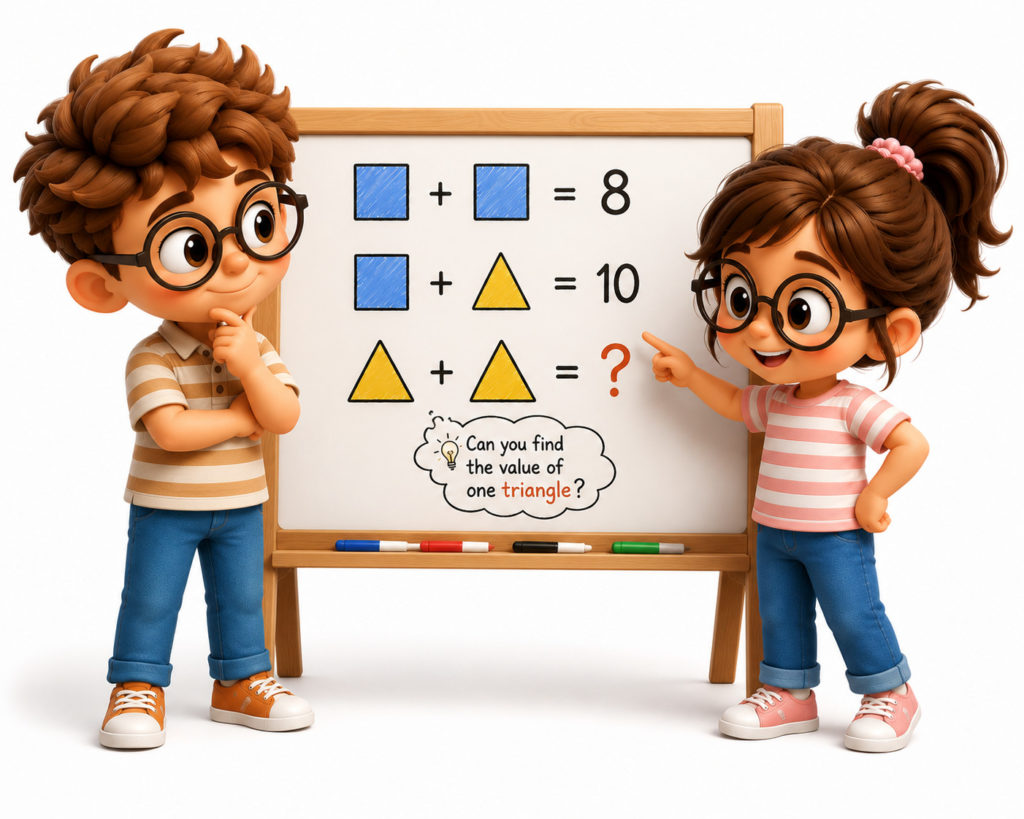
- Algebra shape puzzles
- Balance puzzles
Curriculum Grade 1
General development
- Fine motor skills
- Shading,
- Tracing,
- Paper folding and origami
- Attention and Concentration
- Connecting the dots in order
- Mazes
- Find the differences and mistakes in the pictures
- Find a hidden object
- Complete the drawing
- Using coordinates and charts
Arithmetic
- Counting the number of objects
- Ordinal numbers
- Converting a number to a set and vice versa
- Addition and subtraction within 20
- Addition and subtraction within 100
- Mental math strategies for addition and subtraction
- Introduction to the concept of multiplication
- Calculation chains
- Number Sense
- Understanding of 2-digit numbers. Value and place value
- Missing numbers puzzles
- Math paths
- Counting money
Geometry
- Identifying basic plane figures
- Lines: straight and curved
- Polygons, Circles and ovals
- Identifying basic types of solids
- Polyhedrons
- Shapes with curved surfaces
- Development of spatial and geometric thinking
- Match by shape
- Graphic dictation
- Identify geometric shapes in a picture
- Stacked shapes – identify order and color to create specific order
- Copy designs and continue a pattern on a grid
- Cutting shapes
- Tangram problems
- Find a path through the grid puzzles
- Spatial reasoning problems
Logic
- Logic grids problems
- Introduction to sets; intersection of sets
- Grouping and classification of objects
- Sorting and ordering
- Analogies and patterns
- Logical deduction porblems
- Sudoku
- Sequence of events and sequence of drawing
- Challenging competition-style logic problems
Word problems
- One and two-step word problems involving addition and subtraction of whole numbers
- Word problems and tables
Algebraic thinking
- Algebra shape puzzles
- Balance puzzles
- Scales and logic
Investigation and math olympiad problems
- Various types of investigation problems
- Math Kangaroo and other Math Competitions problems
We encourage students to develop their spatial reasoning, problem-solving and logical-thinking skills through guided play and hands-on assignments and games. Our program includes puzzles, geometric games and building sets aimed at improving both two- and three-dimensional thinking.
Curriculum Grade 2
General development
- Fine motor skills: shading and tracing
- Attention and Concentration
- Breaking the code puzzles
- Find the differences
- Find identical pictures
- Using coordinates
Arithmetic
- Addition and Subtraction of 2-digit numbers
- Standard algorithm
- Mental math strategies: adding and subtracting compatible numbers, rounding, adding and subtracting parts
- Multiplication and Division
- Understanding the concept of multiplication as repeated addition
- Multiplication tables
- Introduction to division
- Number Sense
- Understanding of 3-digit numbers. Value and place value
- Guess the number puzzles
- Missing numbers puzzles
- Math path
- Counting money
Geometry
- Identifying basic plane figures
- Lines: straight and curved
- Polygons
- Identifying basic types of solids
- Vertices, edges and faces of polyhedrons
- Shapes with curved surfaces
- Development of spatial and geometric thinking
- Match by shape
- Dissections of squares
- Copying and transforming designs on a grid
- Introduction to unicursal tracing
- Counting cubes problems
- Spatial reasoning problems
Logic
- Logic grids problems
- Introduction to sets and Venn diagrams
- Relations and ordering
- Grouping and classification of objects
- Analogies and patterns
- More difficult logic problems: pigeonhole principle, fencepost error
- Challenging competition-style logic problems
Word problems
One and two-step word problems involving addition, subtraction and multiplication of whole numbers
Algebraic thinking
- Algebra shape puzzles
- Balance puzzles
Investigation and math Olympiad problems
- Various types of investigation problems
- Math Kangaroo, Continental Math League and other Math Competitions problems
About this course

Mental Math
How Can I Calculate Efficiently?
Mental math is much more than adding numbers quickly in your head. It’s about recognizing patterns, choosing efficient strategies, and understanding how numbers work together.
Rather than memorizing procedures, students learn to solve calculations in flexible ways that make sense to them. They discover that the same problem can often be solved using different strategies and learn to choose the one that is most efficient.
We encourage students to explain their mental strategies and compare different approaches, helping them learn from one another while developing confidence in their own mathematical thinking.
As students develop these skills, they become more confident, more accurate, and better prepared for advanced mathematics. Strong mental math also frees students to focus on solving complex problems instead of getting stuck on calculations.

Number Sense
Do Numbers Make Sense?
Number sense is the ability to understand what numbers mean, not just how to use them. Students learn to recognize relationships between numbers, estimate reasonable answers, compare quantities, and see patterns that make mathematics easier to understand.
Instead of treating each calculation as a separate problem, children begin to notice how numbers fit together. They discover that 9 + 8 can become 10 + 7, that 49 is just one less than 50, and that understanding these relationships makes calculations faster, easier, and more accurate.
As students grow, this way of thinking helps them solve much more complex problems. For example, rather than adding 1 + 2 + 3 + … + 99 + 100 one number at a time, they learn to recognize the pattern and pair numbers to quickly find the sum.
A strong number sense is the foundation for mental math, problem solving, algebra, and higher-level mathematics. It gives students the confidence to reason about numbers instead of relying on memorized rules.

Word Problems
Can You Turn a Story into Math?
Word problems teach students to connect mathematics with the real world. Instead of looking for keywords or memorizing procedures, we encourage children to think about what is happening in the story, identify the important information, and decide how to solve the problem.
Students learn to represent their thinking by drawing pictures, using bar models, making tables, or acting out the situation. These visual strategies help them organize information, recognize patterns, and solve problems that may not look familiar at first.
As students gain confidence, they discover that many different approaches can lead to the correct solution. Learning to explain why a strategy works is just as important as finding the answer itself.

Spatial Reasoning
Can You Picture It From Another Angle?
Spatial reasoning is the ability to visualize, manipulate, and understand objects in space. We use these skills every day—reading maps, assembling furniture, interpreting diagrams, or imagining how an object will look from a different angle.
Our students develop these skills through geometric puzzles, construction sets, mosaics, tangrams, and other hands-on challenges. They learn to mentally rotate shapes, recognize patterns, and see objects from different perspectives while building, experimenting, and exploring.
Strong spatial reasoning is closely connected to success in geometry, engineering, architecture, computer science, and many other STEM fields. That’s why we make it an essential part of our curriculum from the very beginning.

Geometry
How Do Shapes Work Together?
Geometry is much more than learning the names of shapes. Students explore how two- and three-dimensional figures are related, discover their properties, and develop an understanding of the ideas behind perimeter, area, and volume.
Through drawing, measuring, constructing, and solving geometric puzzles, students develop both precision and visual intuition. They become comfortable using tools such as rulers, protractors, and compasses while learning to recognize patterns and relationships between shapes.
This early foundation prepares students for our middle school formal geometry course, where they study theorems, write proofs, and solve increasingly sophisticated geometric problems.

Logic Problems
Can You Figure It Out?
Logic problems encourage students to think beyond familiar methods. Instead of applying a formula or following a memorized procedure, they learn to analyze information, recognize patterns, test ideas, and draw logical conclusions.
Throughout the curriculum, students solve a wide variety of non-routine puzzles and challenges that often have more than one possible approach. They learn that perseverance, creativity, and careful reasoning are just as important as finding the correct answer.
Many of these problems are explored as a group, where students compare ideas, challenge one another’s thinking, and discover that discussing different strategies often leads to better solutions.
We Believe
What to Expect:
Classes meet once a week in groups of no more than seven students, giving every child the opportunity to participate, ask questions, and receive individual attention.
Our classes look very different from a traditional classroom. Along with core mathematics, students solve puzzles, play strategy and logic games, work with hands-on materials, and explore mathematical ideas through discussion and discovery.
Homework is an important part of the learning process. Each week, students receive carefully selected assignments that reinforce classroom learning and help them build confidence and independence.
It’s not unusual for children to want to keep working when class is over. When possible, we give them a little extra time to finish the game, construction, or challenge they’re excited about.
What Your Child Will Gain
Students leave class believing, “I can do it!” They become more willing to tackle challenging problems, ask questions, and trust their own thinking.
Many students can’t wait to share a new puzzle, logic game, or mathematical discovery with friends and family. Learning doesn’t stop when class ends.
Math becomes something to explore rather than something to fear. Students learn that making mistakes, trying different strategies, and asking questions are all part of the learning process.
Week after week, students return excited for the next challenge, eager to discover new ideas and continue growing as mathematical thinkers.