

Grades К-2
About this course
Overview
For many of our young students, we are the first point of contact with the beautiful and complex world of Mathematics, and that’s a great privilege. With that privilege also comes great responsibility – it is our job to help kids discover the joy of mathematics, find confidence in their abilities; and together we lay the foundation that our students will build upon for many years to come.
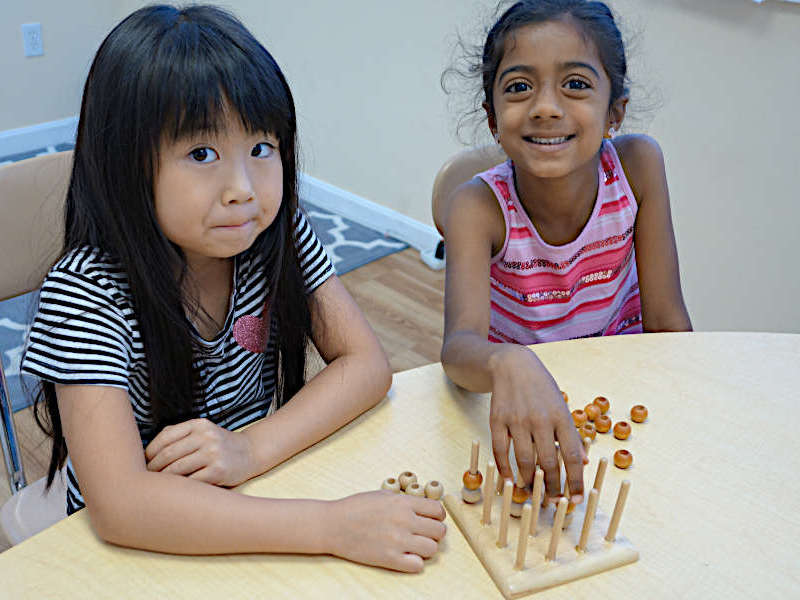
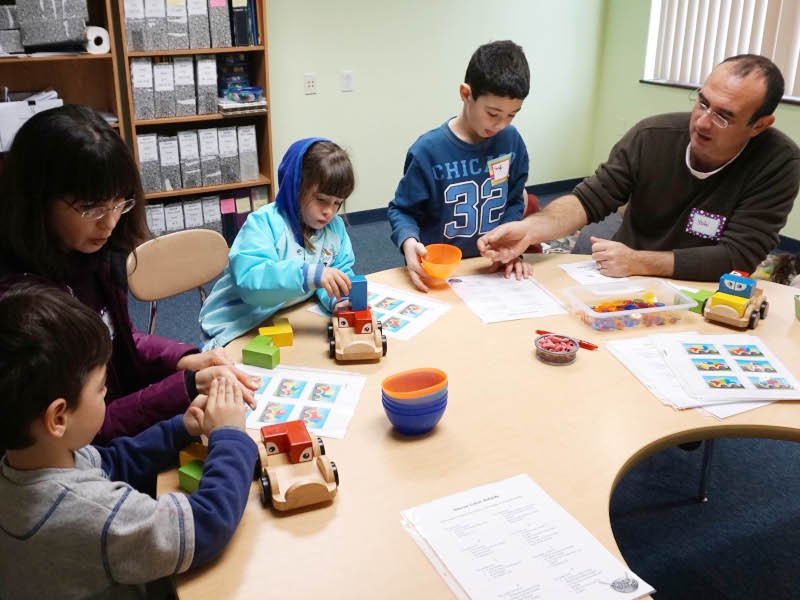
Math is a universal language that we can use to describe and study the world around us – and at our Studio, we teach our students to speak that language from the very start by translating real-life phenomena that they are familiar with into expressions they can write down and equations they can solve. Likewise, we take mathematical concepts and bring them to life as we spend time working with construction sets and geometric puzzles. Here, math doesn’t just exist on paper, and our students bring it to life using manipulatives, and approximately 30 minutes of each class are dedicated to building and creating complex structures using various media, preparing our students for all of the STEM disciplines in the future.
Some of our students may become successful mathematicians, scientists, and engineers, while some may choose other fields of study and career paths, but all of our students will acquire the critical thinking skills that will help them solve the challenges of tomorrow.
About this course
 Mental Math
A strong number sense is an invaluable skill. Most people find basic math skills essential for every day, whether they are leaving tips at a restaurant or getting a mortgage from a bank.
Unfortunately students are often taught to memorize procedures, while gaining little insight into why these procedures work. If students forget a step in the algorithm, they can no longer work out a problem. Instead of memorizing algorithms, we focus on the underlying principles. Our aim is for our students to acquire a more in-depth, comprehensive understanding of the material.
 Critical Thinking
We are trying to teach logical reasoning and critical thinking at a very early age. It teaches how to analyze problems, break them down into manageable steps, and develop the best solutions.
 Word Problems
Solving word problems is one of the most important and applicable skills students learn in school. Whether you need to leave a tip for a waiter, calculate if you have enough money to buy groceries, or estimate the gas mileage of your car, you need to know how to solve word problems. Instead of focusing on procedures or keywords, we ask children to think about the meaning behind each problem.
Visualizing word problems is key to solving new and unfamiliar problems. Drawing a bar model or making a table makes complex problems easy to solve. Throughout the curriculum, we introduce students to a variety of world problems such as rate, fractions, ratio, percentage, etc.
 Spatial Reasoning
We use visual-spatial skills in everyday life. Whether you are using a map, looking at a floor plan or imagining a new couch in your living room, you are solving a spatial reasoning problem.
Our program includes dozens of geometric games, mindbenders, puzzles and construction sets. These manipulatives sometimes require students to mentally flip and rotate objects. Students learn to imagine objects from different perspectives.
 Logic Problems
We are trying to teach logical reasoning and critical thinking at a very early age. It teaches how to analyze problems, break them down into manageable steps, and develop the best solutions.
The studio’s program includes logic units in all grades. We emphasize creative solutions, and thinking “outside the box”. Students become experts at approaching new and difficult problems. They often brainstorm the solution together as a group, and learn to work as a team.
 Geometry
 is the most visual part of the mathematics curriculum, and yet many students struggle with it in high school. The key to a successful geometry course is to start early, and use the right curriculum. Our students study the properties of 2D and 3D shapes, building a solid foundation for more advanced classes. Students develop an understanding of the commonly used formulas for perimeter, area and volume.
Throughout the course, our students get plenty of practice drawing shapes, and using tools like rulers and protractors.
Curriculum Grade K
General development
- Counting skills
- Connect the dots in order up to 15
- Counting the number of objects
- Converting a number to a set and vice versa
- Count the hidden objects
- Fine motor skills
- Shading
- Tracing
- Follow the path
- Paper folding and origami
- Attention and Concentration
- Mazes
- Find the differences and mistakes in the pictures
- Find a hidden object, segments
- Make an identical picture
- Describe the features of an object (faces)
- Drawings of digits
- General knowledge
- General questions
- Math fairy tales
- Opposites
Arithmetic
- Ordinal numbers
- Compare the number of objects in two sets
- Addition and subtraction within 10
- Addition and subtraction within 100
Geometry
- Identifying basic features of 2D shapes
- Straight and curved
- Size
- Number of sides
- Identifying solids and their basic features
- flat versus 3D
- most common solids (sphere, cone, cylinder, cube, rectangular prism)
- Development of spatial and geometric thinking
- Find geometric shapes in the pictures
- Copy design on a grid
- Match by shape
- Complete the drawings of an object
Logic
- Logic grids problems
- Introduction to sets; intersection of sets
- Grouping and classification of objects
- Analogies and patterns
- Sequence of events and sequence of drawing
Word problems
- One-step word problems involving addition and subtraction of whole numbers
Algebraic thinking
- Algebra shape puzzles
- Balance puzzles
Curriculum Grade 1
Our curriculum is based on the best of Russian, American, and Singaporean pedagogical traditions, which emphasize reasoning over memorization.
General development
- Fine motor skills
- Shading,
- Tracing,
- Paper folding and origami
- Attention and Concentration
- Connecting the dots in order
- Mazes
- Find the differences and mistakes in the pictures
- Find a hidden object
- Complete the drawing
- Using coordinates and charts
Arithmetic
- Counting the number of objects
- Ordinal numbers
- Converting a number to a set and vice versa
- Addition and subtraction within 20
- Addition and subtraction within 100
- Mental math strategies for addition and subtraction
- Introduction to the concept of multiplication
- Calculation chains
- Number Sense
- Understanding of 2-digit numbers. Value and place value
- Missing numbers puzzles
- Math paths
- Counting money
Geometry
- Identifying basic plane figures
- Lines: straight and curved
- Polygons, Circles and ovals
- Identifying basic types of solids
- Polyhedrons
- Shapes with curved surfaces
- Development of spatial and geometric thinking
- Match by shape
- Graphic dictation
- Identify geometric shapes in a picture
- Stacked shapes – identify order and color to create specific order
- Copy designs and continue a pattern on a grid
- Cutting shapes
- Tangram problems
- Find a path through the grid puzzles
- Spatial reasoning problems
Logic
- Logic grids problems
- Introduction to sets; intersection of sets
- Grouping and classification of objects
- Sorting and ordering
- Analogies and patterns
- Logical deduction porblems
- Sudoku
- Sequence of events and sequence of drawing
- Challenging competition-style logic problems
Word problems
- One and two-step word problems involving addition and subtraction of whole numbers
- Word problems and tables
Algebraic thinking
- Algebra shape puzzles
- Balance puzzles
- Scales and logic
Investigation and math olympiad problems
- Various types of investigation problems
- Math Kangaroo and other Math Competitions problems
We encourage students to develop their spatial reasoning, problem-solving and logical-thinking skills through guided play and hands-on assignments and games. Our program includes puzzles, geometric games and building sets aimed at improving both two- and three-dimensional thinking.
Curriculum Grade 2
General development
- Fine motor skills: shading and tracing
- Attention and Concentration
- Breaking the code puzzles
- Find the differences
- Find identical pictures
- Using coordinates
Arithmetic
- Addition and Subtraction of 2-digit numbers
- Standard algorithm
- Mental math strategies: adding and subtracting compatible numbers, rounding, adding and subtracting parts
- Multiplication and Division
- Understanding the concept of multiplication as repeated addition
- Multiplication tables
- Introduction to division
- Number Sense
- Understanding of 3-digit numbers. Value and place value
- Guess the number puzzles
- Missing numbers puzzles
- Math path
- Counting money
Geometry
- Identifying basic plane figures
- Lines: straight and curved
- Polygons
- Identifying basic types of solids
- Vertices, edges and faces of polyhedrons
- Shapes with curved surfaces
- Development of spatial and geometric thinking
- Match by shape
- Dissections of squares
- Copying and transforming designs on a grid
- Introduction to unicursal tracing
- Counting cubes problems
- Spatial reasoning problems
Logic
- Logic grids problems
- Introduction to sets and Venn diagrams
- Relations and ordering
- Grouping and classification of objects
- Analogies and patterns
- More difficult logic problems: pigeonhole principle, fencepost error
- Challenging competition-style logic problems
Word problems
One and two-step word problems involving addition, subtraction and multiplication of whole numbers
Algebraic thinking
- Algebra shape puzzles
- Balance puzzles
Investigation and math Olympiad problems
- Various types of investigation problems
- Math Kangaroo, Continental Math League and other Math Competitions problems
We believe
What to expect: