
Middle school
About this course
Overview
Preparing Students for Advanced Mathematics
Middle school is where mathematics becomes more abstract and interconnected. Students develop algebraic thinking, geometric reasoning, and advanced problem-solving skills that prepare them for high school and beyond.
Students entering our middle school program have already built a strong mathematical foundation. As a result, by Grade 6 they are typically working about one year ahead of the standard public school curriculum, allowing them to explore more advanced mathematics while developing a deep understanding of the concepts they study.
By Grade 7, students cover most of the Algebra I curriculum, giving them a strong head start before high school. In Grade 8, we offer Geometry and Algebra II as separate courses. Students may enroll in either course or take both, depending on their goals and readiness. In each course, students cover the majority of the high school curriculum while strengthening the reasoning and problem-solving skills that are essential for future success.
Throughout every class, we encourage students to ask questions, explain their thinking, and understand the mathematics behind each solution. By the time our students enter high school, they have the confidence, mathematical maturity, and strong foundation needed to excel in advanced mathematics.
About this course
 Critical Thinking and Problem solving
Can I Solve What I’ve Never Seen Before?
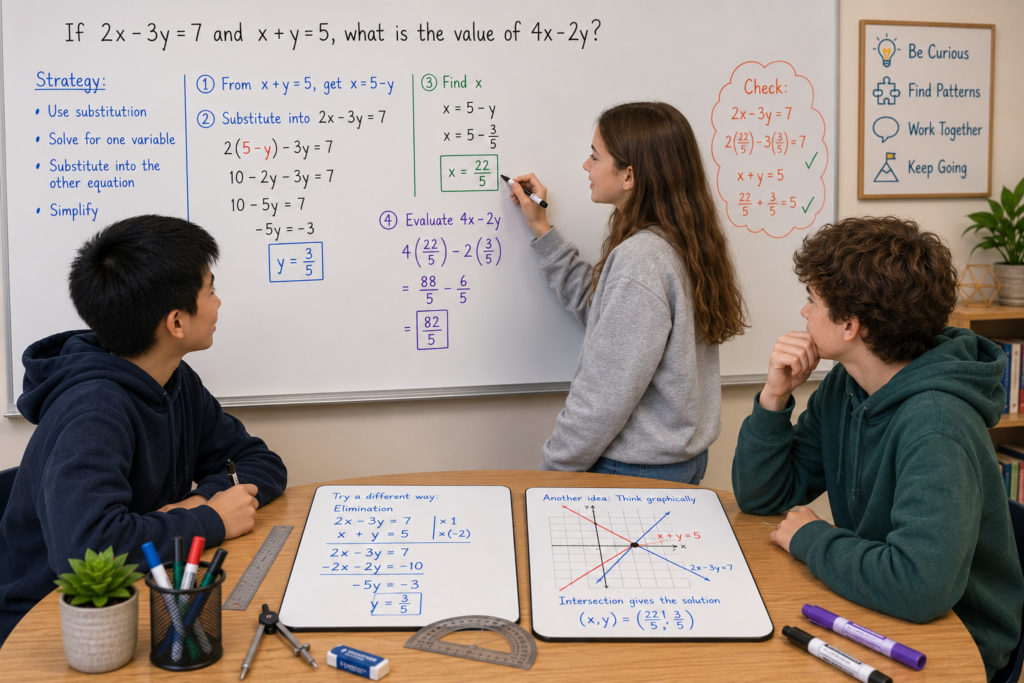
Many math problems can be solved by following a familiar procedure. But what happens when there is no obvious formula or method? Our students learn to analyze the problem, recognize patterns, test ideas, and develop strategies that lead to a solution.
Through challenging non-routine problems, students strengthen their logical reasoning, creativity, and perseverance. They learn to explain their thinking, compare different approaches, and recognize that a complex problem often has more than one elegant solution.
These skills extend far beyond mathematics. The ability to think critically, solve unfamiliar problems, and communicate ideas clearly prepares students for advanced mathematics and future studies in science, engineering, computer science, economics, and many other fields that value analytical thinking and problem-solving.
 From Pre-Algebra to Algebra II
How Do Problems Become Equations?
Algebra is much more than solving for x. It is the language of patterns, relationships, and logical thinking. Throughout our program, students learn to recognize mathematical structures, express ideas with variables, and solve increasingly complex problems with confidence.
Our students begin developing algebraic thinking in the elementary years, build a strong foundation in Pre-Algebra, and by Grade 7 cover most of the Algebra I curriculum. In Grade 8, students continue with our high school-level Algebra II course, exploring more advanced concepts while strengthening their mathematical reasoning.
Rather than memorizing procedures, students learn to understand why algebraic methods work. This deep understanding prepares them for advanced high school mathematics, standardized tests, and future studies in science, engineering, computer science, economics, and many other fields.
 Geometry
How Can I Prove It’s True?
Geometry is much more than learning formulas or naming shapes. It is a branch of mathematics that develops logical reasoning by exploring the relationships between points, lines, angles, triangles, circles, and other geometric figures.
Our students investigate geometric concepts through drawing, measurement, geometric constructions, transformations, and challenging problem solving. As their understanding grows, they learn to recognize patterns, justify their conclusions, and write formal geometric proofs. By developing clear, logical arguments, students gain a deeper understanding of why mathematical relationships are true—not just how to apply them.
Throughout the program, students continue to strengthen their visual-spatial reasoning through geometric puzzles, construction challenges, and hands-on activities. This combination of visual thinking and formal reasoning prepares students for high school Geometry and provides a strong foundation for future studies in mathematics, engineering, architecture, computer graphics, and other STEM fields.
 Logic & Mathematical Reasoning
Can I Think Outside the Box?
Logic problems are one of our students’ favorite parts of class. They challenge students to think creatively, look at problems from different perspectives, and find solutions that are not immediately obvious. Solving a difficult problem through careful reasoning is an exciting and rewarding experience.
Logic is woven throughout our middle school curriculum. We encourage students to think outside the box, challenge assumptions, and explain their reasoning. They learn to ask not only, “Is this true?” but also, “How can I prove it?”
Students often work together, sharing ideas and comparing different approaches. Through these discussions, they become more confident thinkers who are ready to tackle challenging mathematical problems.
 Word Problems
Can I Turn a Real Situation into Mathematics?
Word problems help students connect mathematics to real situations by translating information into equations, diagrams, tables, and other mathematical models. Rather than relying on keywords or memorized procedures, our students learn to understand the relationships within each problem and choose the most effective strategy.
As students progress through middle school, they solve increasingly challenging problems involving ratios, proportions, percentages, rates, probability, geometry, and algebra. They learn to organize information, break complex problems into manageable steps, and recognize that there is often more than one path to the correct solution.
By focusing on reasoning rather than shortcuts, students become confident problem solvers who are ready for advanced mathematics and real-world applications.
 Math Competitions
Can You Rise to the Challenge?
We actively encourage our students to participate in math competitions throughout the year. Our lessons regularly include challenging problems inspired by competitions such as Math Kangaroo, Noetic Learning Math Contest, and other national and international math Olympiads.
Competition problems encourage students to think creatively, apply mathematical concepts in new ways, and persevere through challenging situations. Whether students are searching for an elegant solution or discussing different strategies with their classmates, they develop confidence, creativity, and a deeper appreciation for mathematics.
Our students consistently earn top rankings, medals, and awards in a variety of competitions. While we are proud of these achievements, we believe the greatest reward is helping students become confident, curious, and enthusiastic problem solvers.
Curriculum Grade 6
Curriculum Grade 7
Curriculum Grade 8
We Believe
What to Expect:
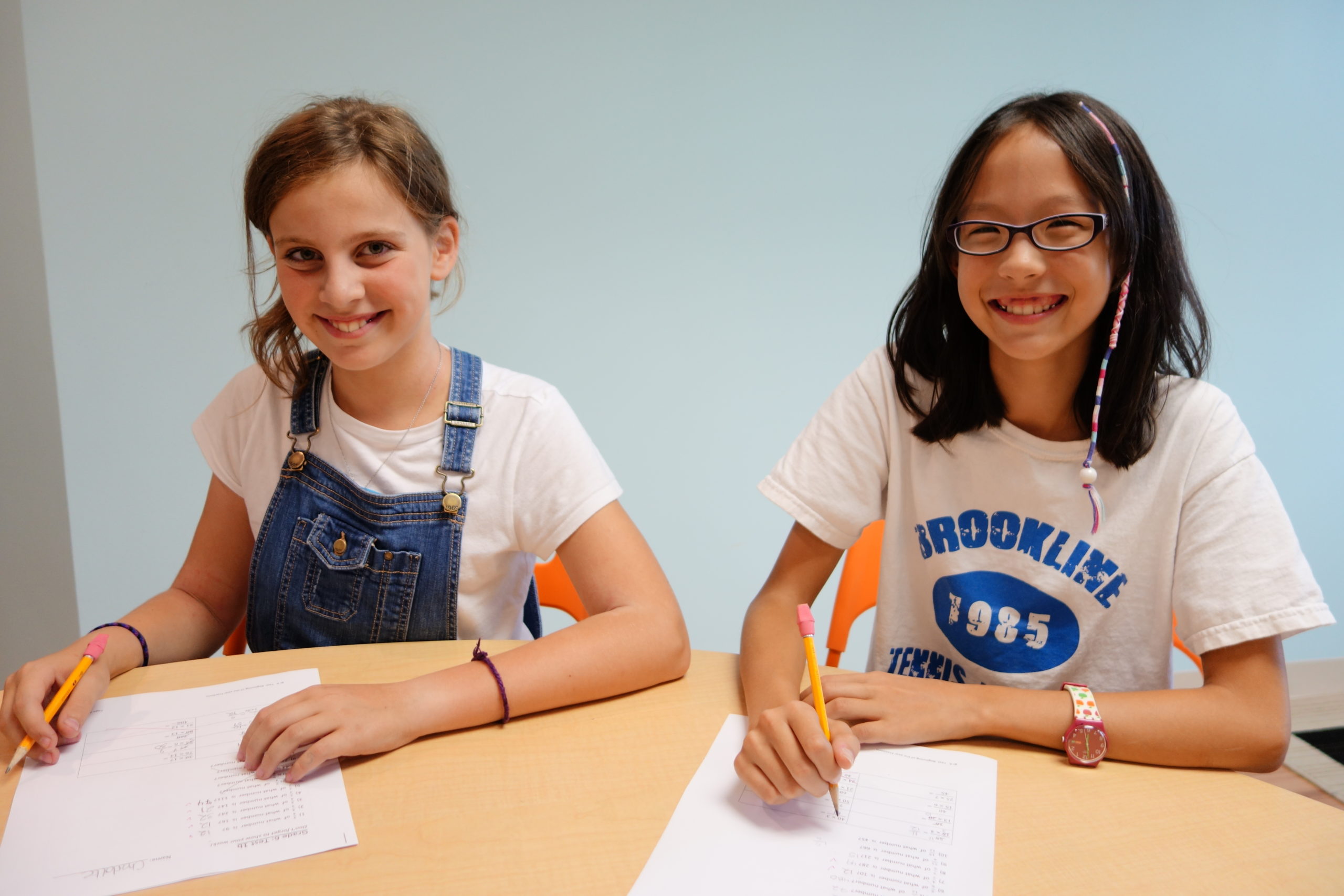
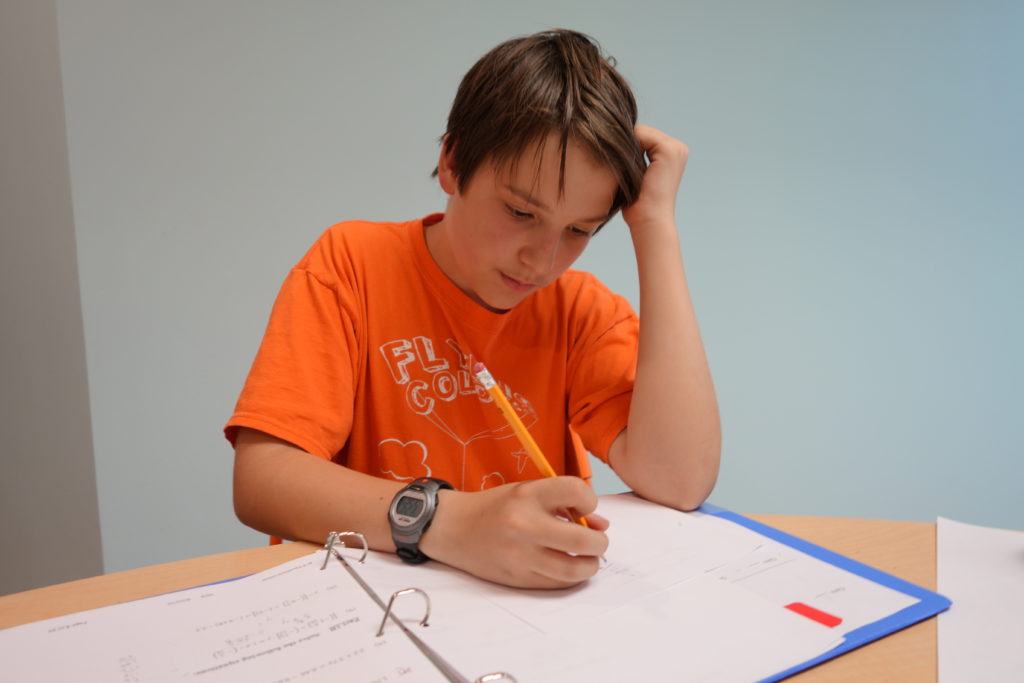
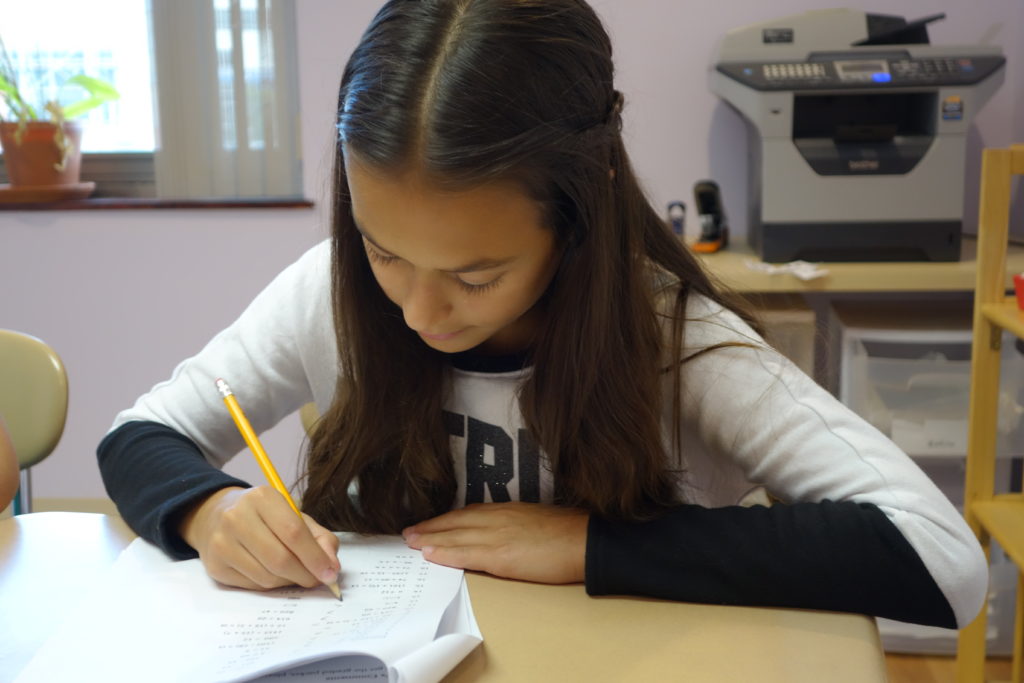
Classes meet once a week in groups of no more than seven students. Students are expected to participate actively, ask questions, explain their reasoning, and contribute to class discussions.
Our classes go well beyond the standard middle school curriculum. Students work with advanced concepts, solve non-routine problems, and learn to approach mathematics with greater depth, precision, and independence.
In Grade 8, we offer two separate high school-level courses: Algebra II and Geometry, held on different days. Students may take either course or enroll in both, attending the Studio twice a week.
Middle school students are expected to take increasing responsibility for their learning. They learn to manage assignments, work through difficult problems, and seek help when they need it. At the same time, we maintain close communication with parents and believe that their support continues to play an important role in each student’s progress.
Homework is an essential part of our program. Students receive assignments every week to reinforce classroom learning, practice new skills, and tackle problems that require deeper thought. Consistent effort between classes is an important part of succeeding in our accelerated curriculum.
What Your Child Will Gain

Students learn not to be intimidated by difficult or unfamiliar problems. They develop the persistence and strategies needed to work through challenges and find a path toward a solution.
Students develop a deep understanding of algebra and geometry rather than simply memorizing formulas and procedures. They learn to recognize mathematical relationships, build logical arguments, and explain why their solutions work.
As students progress through middle school, they become increasingly responsible for their own learning. They learn to ask the right questions, evaluate their work, communicate their reasoning, and approach new concepts with greater independence.
With most of Algebra I covered by Grade 7 and the opportunity to study high school-level Algebra II and Geometry in Grade 8, students enter high school with a strong foundation and the confidence to succeed in advanced mathematics.